My sister graduated on Saturday.
I was in my seat waiting for the ceremony to start, cap and gown ahead of me as far as I could see, and I was scrolling X.
A post stopped me. Someone had built a portfolio managed entirely by Claude — the AI, not a person. It ran on a schedule. It made decisions. It placed trades. The account holder checked in weekly. That was it.
I read the whole thread. Then I opened my notes app and started writing.
By that evening, back at the hotel, I opened my laptop. The celebrating was done. It was around 5pm.
About an hour later, I had a working system.
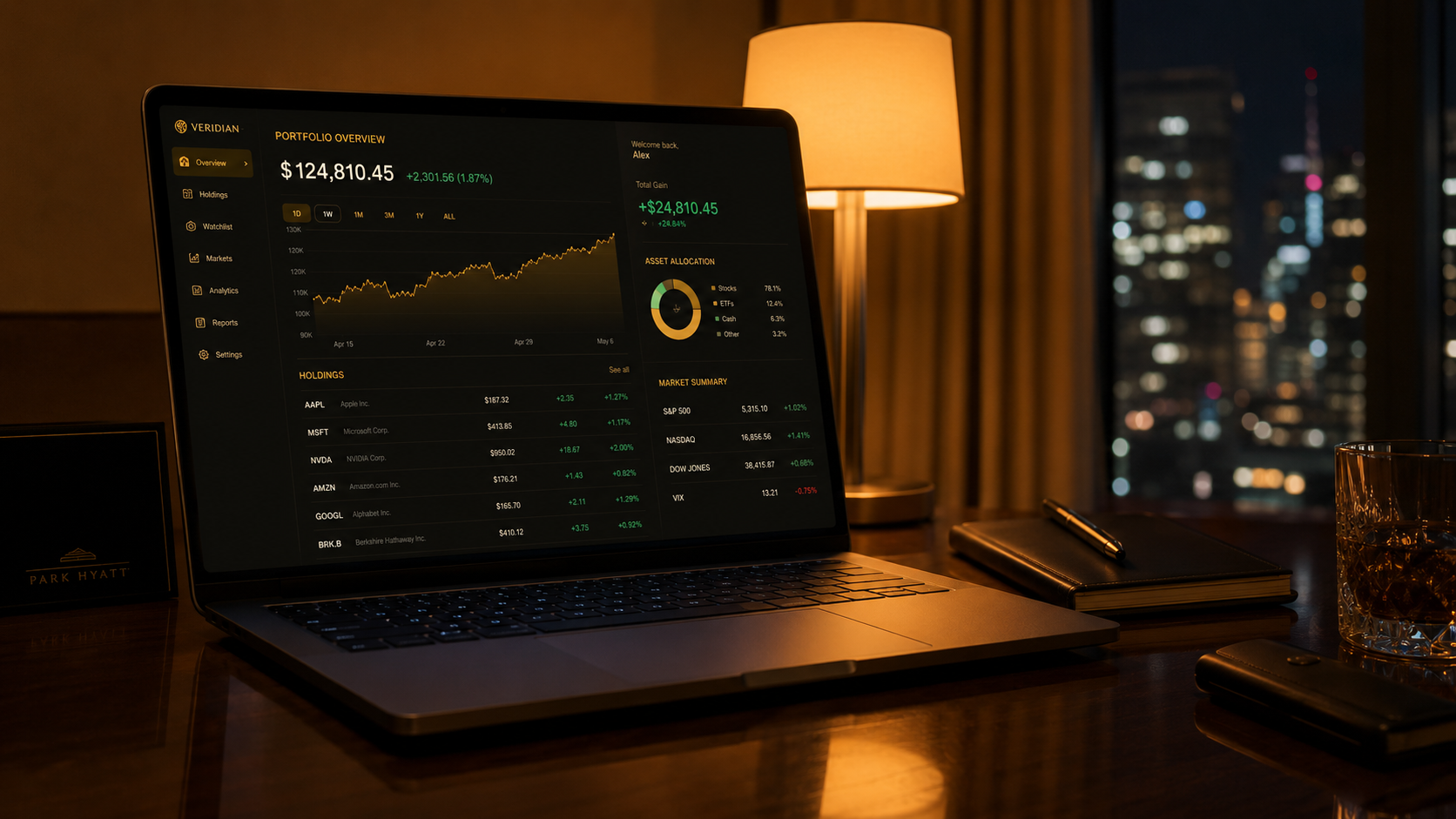
Not a prototype. Not a proof of concept. A running application with two structured phases, connected to a brokerage API, placing real paper trades against live market prices. By the time I had to leave for the next part of the day, NVDA, META, XOM, AXON, MRNA, and SHOP were in the portfolio.
I sat there and thought: that was too easy.
The Facebook Marketplace experiment — the first one I documented on this blog — required my presence at every step. If I didn't post listings, inventory sat. If I didn't reply to buyers, deals died. Every dollar passed through my attention.
This one doesn't work that way.
Left alone, it runs. Every Friday, it wakes up, grades its own prior decisions, makes new calls, and places orders. No input from me required. I could go dark for a month and it would carry on.
That's a structurally different kind of experiment. I'm not testing a tool that makes my work faster. I'm testing whether a system can do the work entirely — and whether, over time, I can trust it enough to leave it alone.
Every other asset I'm building still has me in the loop somewhere. This one is the first real test of what ownership looks like when you're not the bottleneck.
I can already tell I'm going to watch it anyway. Not because I have to. Because I want to. Ownership feels good even when it's hands-off.
What the System Actually Does
The portfolio runs on two phases every week.
Phase 1: Reconciliation. Claude reads every open position and grades itself against its own prior thesis. It pulls current prices and recent news via web search — no cached data, no hallucinated prices. Was the reasoning right? What changed? What did it miss? It writes honest notes — good calls and bad ones both — and nothing gets deleted. The history is append-only. It cannot quietly update a prediction that aged poorly.
Phase 2: Decisions. Using those self-grades as context, Claude makes new calls: hold, close, or open. For every position it opens, it writes a full investment thesis — bull case, bear case, expected returns at one, three, and twelve months. Everything goes into permanent record.
Then it executes. Orders go to the brokerage API automatically.
The structure isn't accidental. Reconciliation before decisions means Claude is reasoning from its own track record, not from a clean slate. Good calls stay. Bad ones stay too. The history follows it forward whether it wants it to or not.
The Part Where I Had to Ask It to Explain Itself
I know how to invest at a high-level. Index funds, diversification, long time horizon. I've never needed to know more than that.
Active trading? Genuinely out of my depth.
When Claude built out the initial portfolio, I didn't push back on the allocations because I didn't have strong enough opinions to push back with. I gave it the parameters. It built the portfolio. I watched it explain bull cases and variance structures and I had to stop it.
I asked it to build a "How It Works" tab in the dashboard. Explained like I was five years old. Because I needed it. I've learned enough to know when I'm out of my depth. This time I just admitted it faster.
It built me a system. Then it explained what the system was for.
Most of the time when I build with AI, I understand the domain and I'm using Claude to move faster or reach further. This was the first time I started from zero and Claude was genuinely ahead of me the entire time. I was not the operator in the sense of knowing better.
Usually I know what I'm building. This was the first time I needed the thing I built to explain itself to me.
What I'm Actually Waiting For
This is paper trading. Fake money, real market prices, real API execution. The plan is to run it this way for several weeks, then put $1,000 in live.
But the threshold isn't about returns.
I'm not waiting for it to make money — that's not how markets work, and expecting consistent gains in the first few weeks would mean I don't understand what I'm evaluating. What I'm waiting for is legibility. Consecutive weeks where I can read Claude's reconciliation notes, follow the reasoning, and agree with the decisions — even if the position moved against it. Sound logic from bad outcomes is still sound logic. Sloppy reasoning from good outcomes is still sloppy reasoning.
When I can read the weekly output and trust the thinking behind it — not just the result — that's when the real money goes in.
I'm not asking it to be right. I'm asking it to be a manager I can follow.
The first real Friday run happens May 15th. Reconciliation, decisions, new trades — all of it, automated, whether I'm paying attention or not.
I don't have results yet. I'm writing this before a single position has been graded. That's how this blog works — every experiment gets documented from day one, not after I know how it ends. The Marketplace posts started with $300 and no idea whether flipping would scale. This one starts with six paper positions and no idea whether Claude will prove trustworthy with real capital.
What I do know is what I felt watching those first orders go through. Not triumph — more like the beginning of a longer feeling. The same feeling I had listing that first Keurig, except the ceiling on this one looks different.
I'll tell you what happens when it runs.
— The Daring Dime